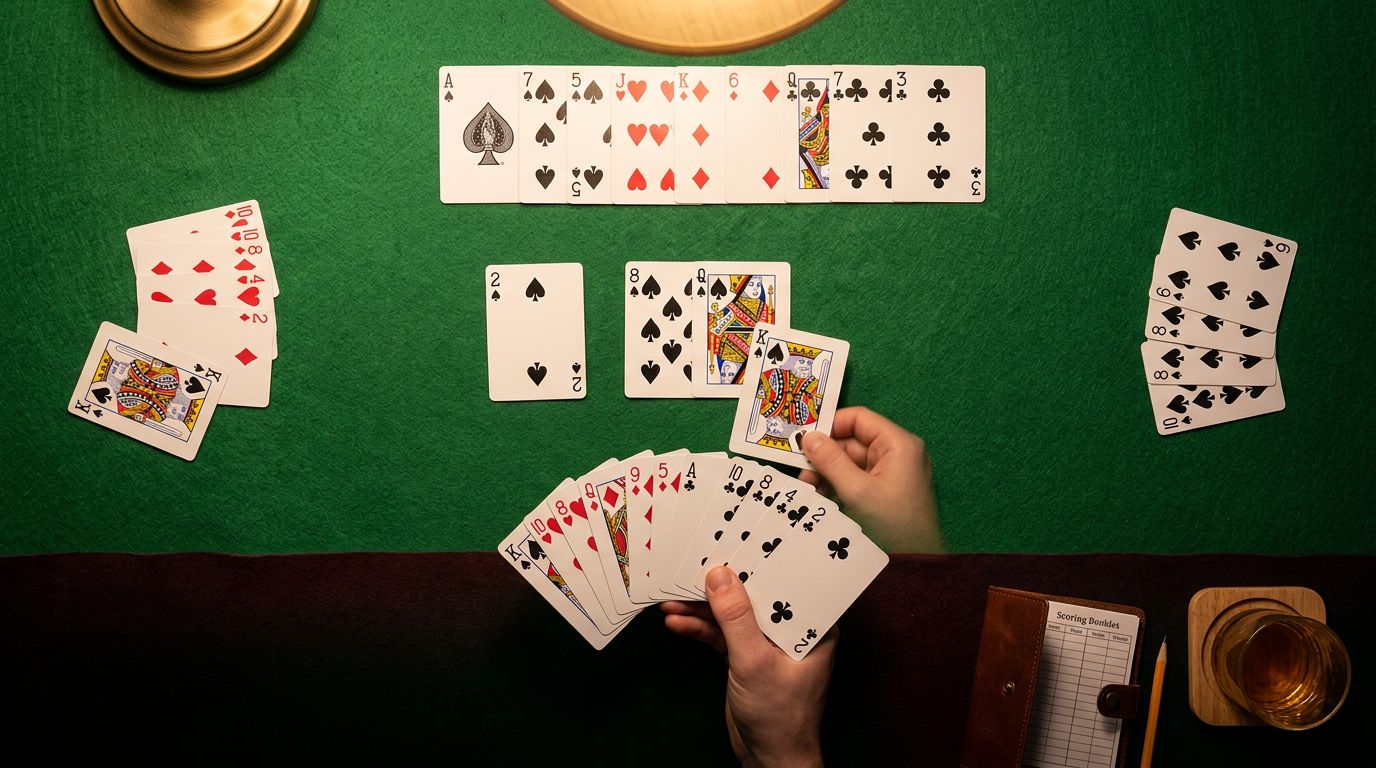
Dummy Reversal: Ruff in the Long Trump Hand for Extra Tricks
When you first learned to play trump contracts, someone probably told you to ruff losers in the short trump hand (usually dummy). Ruffing in the long trump hand doesn’t create extra tricks - you were going to make those trumps anyway.
That’s true. Most of the time.
But there’s an exception that can create an extra trick: the dummy reversal. You ruff multiple times in your hand (the long trump holding), then use dummy’s shorter trumps to draw the opponents’ trumps. Done right, you make more tricks from the trump suit than you have high trumps.
Why It Works
Normal play: You have six trumps in hand, three in dummy. You draw trumps with your long holding, take three trump tricks, then ruff a loser or two in dummy. Total: maybe five trump tricks.
Dummy reversal: Same six-three trump fit. You ruff three times in your hand, reducing it to three trumps. Then you use dummy’s three trumps to draw the opponents’ trumps. You’ve taken six trump tricks - three ruffs in hand, three draws from dummy. That’s one more than the number of trumps in your long hand.
The key insight: by making your hand the short trump hand (through ruffing), you create the situation where ruffs generate extra tricks.
The Basic Position
           ♠ K Q J
           ♥ A 8 7
           ♦ A 9 6 2
           ♣ K 5 4

♠ 10 9 7 6         ♠ 5 4
♥ 9 6 2            ♥ Q J 10 5
♦ K Q J            ♦ 10 8 5
♣ 9 7 3            ♣ Q J 10 2

           ♠ A 8 3 2
           ♥ K 4 3
           ♦ 7 4 3
           ♣ A 8 6
You’re in 4♠. West leads the ♦K.
Count your losers: three diamonds and potentially a heart. That’s one too many. You could try to establish dummy’s hearts, but that’s risky.
Better plan: dummy reversal.
Win the ♦A. Cash the ♥A-K, then ruff a heart with a low spade. Return to dummy with a club, ruff another heart. Return to dummy with the other club, ruff dummy’s last heart.
Now count your tricks: three heart ruffs in hand, plus the ♠A, plus three top spades in dummy (which you’ll use to draw the last three opposing trumps), plus the minor suit aces and club king. That’s eleven tricks.
You made four trump tricks from your four-card holding by ruffing three times, plus three more trump tricks from dummy. Seven total trump tricks from an eight-card fit. Normal play would have netted only five or six.
When to Use a Dummy Reversal
You need several things in place:
1. Enough ruffs available You need at least two, preferably three, ruffs in your hand. You’re deliberately shortening your long trumps, so you need losers to ruff.
2. Enough entries to dummy Getting back and forth is crucial. You need entries to ruff in hand, then more entries to draw trumps from dummy. Most failed dummy reversals die from entry problems.
3. Dummy’s trumps are high enough Dummy will be drawing the opponents’ trumps at the end. If dummy has small trumps, this won’t work - you’ll lose control.
4. It actually gains a trick Sometimes ruffing in the long hand doesn’t help. You need to count carefully and make sure the dummy reversal creates an extra trick compared to normal play.
A Full Example
           ♠ Q J 10
           ♥ A K 7
           ♦ K Q 8 5
           ♣ A 6 4

♠ 9 7 6 3          ♠ 4
♥ 9 5 2            ♥ Q J 10 6
♦ 10 9 3           ♦ J 7 6 2
♣ K Q 8            ♣ J 10 7 5

           ♠ A K 8 5 2
           ♥ 8 4 3
           ♦ A 4
           ♣ 9 3 2
You’re in 6♠. West leads the ♣K.
Quick count: You have five spade tricks (five top honors between the hands), three hearts, three diamonds, one club. That’s twelve tricks.
Wait. Count again more carefully. You have the ♠A-K in hand and ♠Q-J-10 in dummy. That’s five spade honors, but only four trump tricks if you draw trumps normally - one opponent will still have a trump after you’ve played four rounds.
You need to make all five spade honors take tricks. How? Dummy reversal.
Win the ♣A. Cash the ♦A-K-Q, then ruff a diamond with a high spade (the king). Cross to the ♥A, ruff another diamond with the ♠A. Cross to the ♥K, ruff dummy’s last diamond with the ♠8.
Now lead your last club. Dummy ruffs (you don’t care with what). You’ve reached dummy for the last time, and dummy has the ♠Q-J-10 left. These draw the last three opposing trumps.
Count your tricks: three diamond ruffs in hand, three trump leads from dummy, three hearts, one club. That’s ten tricks before you even count the high diamonds you cashed. Twelve total.
If you’d played normally (drawing trumps from your hand), you’d make five trumps, three hearts, three diamonds, one club - only twelve tricks if everything works. And if trumps were 4-1, you’d lose control. The dummy reversal guarantees the slam.
Recognizing the Opportunity
Look for these clues:
Short suit in dummy that you can ruff out Ideally, dummy has a three-card or four-card side suit, and you have shortness or can create shortness in that suit.
Plenty of entries to dummy High cards in dummy’s side suits give you the transportation you need.
Good intermediates in dummy’s trumps You need dummy’s trumps to be able to draw the opponents’ trumps. The ♠Q-J-10 is perfect. The ♠7-6-5 won’t work.
Enough trumps in hand You need at least four trumps in your hand to make multiple ruffs worthwhile.
Common Mistakes
Running out of entries too soon You use up dummy’s entries for other purposes, then can’t get back to ruff. Plan the whole hand before playing to trick one.
Not recognizing when it helps Sometimes ruffing in the long hand doesn’t gain anything. If you can make your contract with normal play, stick to normal play. Dummy reversals are harder to execute and more can go wrong.
Drawing trumps first If you draw all the trumps from your hand, you can’t ruff anything. The whole point is to ruff in your hand before using dummy’s trumps to draw theirs.
Ruffing with small trumps when you need them for control If you need to keep small trumps to maintain control (for example, if one opponent has length), ruffing them away can be fatal. Make sure you can afford to shorten your trump holding.
The Trump Echo
Advanced defenders know about dummy reversals too. When they see you start ruffing in the long trump hand, they might try to disrupt your entries or force you to use up trumps prematurely.
One defensive signal is the trump echo - playing high-low in trumps to show three cards. If a defender shows three trumps, partner knows they might need to attack entries before declarer completes the dummy reversal.
You can’t always prevent good defense, but you can execute your plan quickly. Get those ruffs in before the defenders can organize their counterattack.
Timing Considerations
You often need to do the dummy reversal early. If you play other suits first, defenders might find a way to disrupt your entries or force you with their own plays.
Typical sequence:
- Win the opening lead (ideally in dummy)
- Start ruffing immediately
- Use dummy’s entries to alternate between ruffing and returning to dummy
- Only after all your ruffs are done, use dummy’s remaining trumps to draw theirs
Don’t get distracted by other plays. If you’ve identified a dummy reversal as the winning line, execute it before doing anything else.
Partial Dummy Reversal
Sometimes you don’t need to ruff three times. Just one or two ruffs in the long hand might be enough to create the extra trick you need.
           ♠ K Q 10
           ♥ A 7 6 3
           ♦ K Q 5
           ♣ A 6 4

♠ 9 7 6            ♠ 5 4
♥ K Q J 9          ♥ 10 5 2
♦ 10 9 3           ♦ J 8 7 6
♣ K Q 8            ♣ J 10 7 5

           ♠ A J 8 3 2
           ♥ 8 4
           ♦ A 4 2
           ♣ 9 3 2
You’re in 4♠. West leads the ♥K.
You have one heart loser, three club losers. You need to avoid one club loser.
Win the ♥A, cash two high diamonds, ruff a diamond in hand. Return to dummy with a trump, ruff another diamond.
Now you can cross to dummy with a trump and draw the last trump with dummy’s third spade. You’ve made five trump tricks (two ruffs in hand, three high spades from dummy) plus the top diamonds and the club ace. Ten tricks.
That’s a partial dummy reversal - just two ruffs instead of three, but enough to generate the extra trick you needed.
Advanced Applications
In slam contracts, dummy reversals can create the extra trick that makes the difference between twelve and thirteen tricks. The technique is the same, but the margin for error is smaller.
You’ll also see dummy reversals combined with other advanced plays - squeezes, endplays, or card combinations. The better you get at recognizing when you can ruff in the long hand profitably, the more opportunities you’ll find.
Take Your Game Further with Brian
Brian handles advanced concepts and can walk you through complex bridge situations. Try Brian free →
Practice Makes Perfect
Next time you pick up a hand with four or five trumps opposite three good ones in dummy, ask yourself: is there a suit I can ruff out in my hand? Do I have the entries? Will it create an extra trick?
You won’t always have a dummy reversal available. But when you do, it’s immensely satisfying to execute. You’re violating one of bridge’s basic principles (don’t ruff in the long hand), and making it work to create tricks out of thin air.