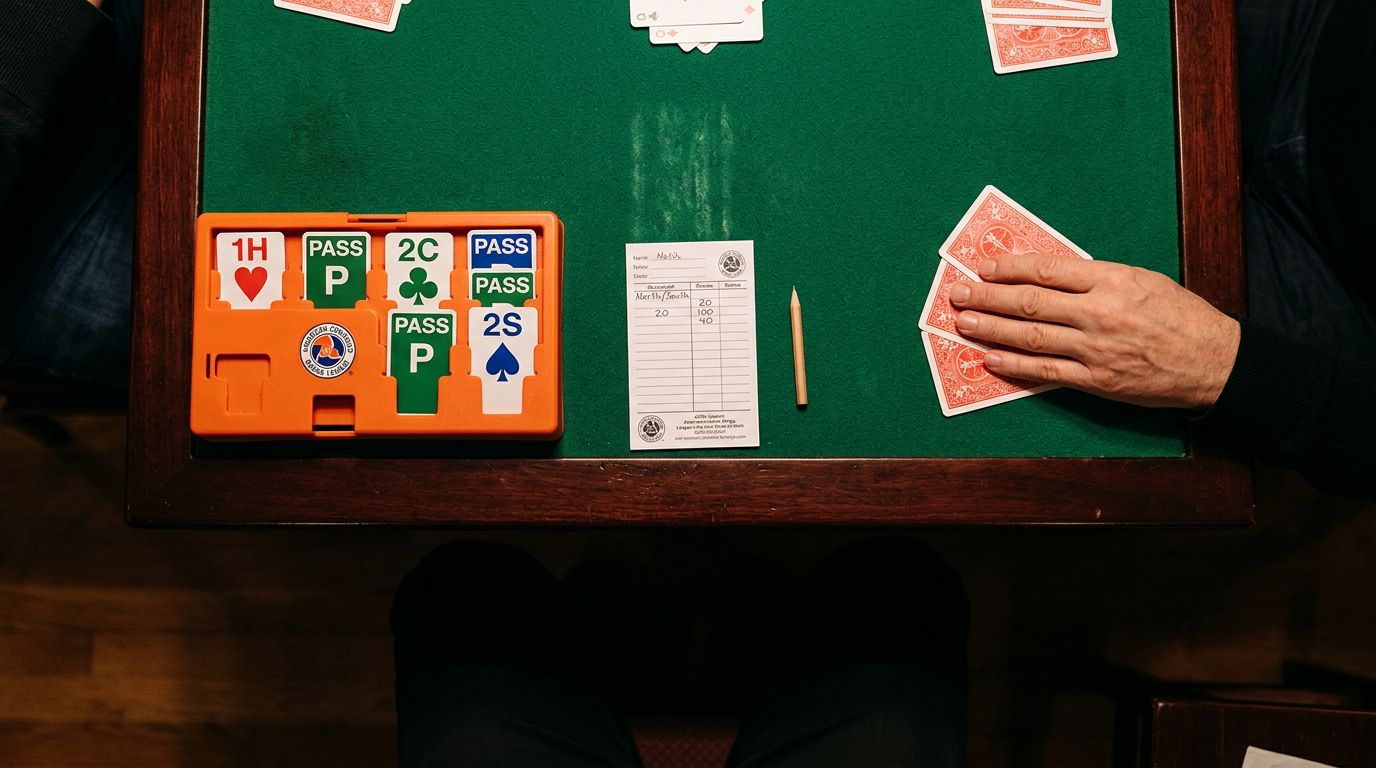
When to Double for Penalties: Recognizing the Right Moment
You’re holding ♠KQJ109 and RHO bids 1♠. You want to double them. But is that for takeout or penalty?
Understanding which doubles are penalty and which are takeout is one of the trickiest parts of competitive bidding. Miss a penalty double and you let them make a contract you could’ve beaten for 500. Double for penalty when you shouldn’t and partner thinks it’s takeout, leaving you in an absurd contract.
Let’s fix that.
The Basic Framework
Here’s the rule most pairs play:
Takeout doubles:
- Low-level doubles of suits when we haven’t found a fit
- Doubles through two rounds of bidding
- When partner hasn’t bid
Penalty doubles:
- Doubles of notrump contracts
- Doubles after we’ve found a fit
- Doubles at high levels (4-level and up)
- Doubles when partner has already bid
- Doubles in passout seat after partner passed their opening
That’s the general framework. Now let’s get specific.
Doubles of Opening Bids (Usually Takeout)
When they open one of a suit, double is almost always takeout in the modern game.
1♣ - Double = Takeout (showing other three suits)
1♥ - Double = Takeout
1♠ - Double = Takeout
Even if you have ♠KQJ109 behind their 1♠ opener, double is still takeout. Your partner will bid, and you’ll defend 2♥ or 3♣ or whatever they pick.
Want to penalize 1♠? Pass. If partner reopens with a double in the passout seat, then you can convert it to penalty by passing.
The rare exception: If you’re playing “support doubles,” there are specific sequences where double shows three-card support for partner. But that’s different - not a penalty double.
Converting Takeout Doubles to Penalty
Your LHO opens 1♠, partner doubles (takeout), RHO passes. You’re holding:
♠ Q J 10 9 6
♥ 8 3
♦ K 7 4
♣ Q 6 2
Pass. Partner’s double was for takeout, but you’re converting it to penalty by passing. Your ♠QJ1096 sits behind declarer’s spades. That’s worth probably three trump tricks. Partner has opening values, and you have length and strength in their suit. This is a penalty pass.
The key: When partner makes a takeout double and you have length and strength in opener’s suit, passing converts the double to penalty.
Doubles After We’ve Found a Fit (Penalty)
Once you and partner have found a fit, doubles become penalty-oriented.
Sequence:
LHO   Partner   RHO   You
1♣    1♠        2♣    Double
This double is penalty. Partner bid 1♠, showing spades. You’re supporting spades by doubling their competitive 2♣ bid. You’re saying “I have clubs and we’re making this, partner. Let’s defend.”
Example hand:
♠ K 8 6
♥ A 7
♦ 9 7 4 2
♣ A Q J 3

LHO opens 1♣, partner overcalls 1♠, RHO raises to 2♣
Double. You have good clubs sitting over their club suit, and you have spade support. Defending 2♣ doubled rates to work out well.
Low-Level Penalty Doubles (Cooperative Doubles)
When they compete over our suit, doubles at the one, two, or three-level are often “cooperative” - showing values and asking partner to decide between defending or competing higher.
Sequence:
You   LHO   Partner   RHO
1♥    Pass  2♥        2♠
Dbl
Your double here shows good spades (probably 3+ cards) and extras. Partner can pass to defend 2♠ doubled if they have something in spades, or bid on to 3♥ if they’re minimum with weak spades.
Example hand:
♠ A Q 7
♥ K Q 9 6 4
♦ 8
♣ A 10 6 2

You open 1♥, partner raises to 2♥, RHO bids 2♠
Double. You have 16 HCP, good spades, and extras. You’re showing values in spades and giving partner a choice: defend or bid 3♥.
Clear Penalty Situations
Some doubles are unambiguously penalty:
1. Doubles of Notrump Contracts
All doubles of notrump are penalty.
1NT - Double = Penalty (showing 15+ HCP typically)
2NT - Double = Penalty
3NT - Double = Penalty
The only time this gets murky is artificial notrump bids (like “unusual 2NT”). But natural notrump? Always penalty.
2. Doubles at the 4-Level or Higher
4♠ - Double = Penalty
5♣ - Double = Penalty
6♦ - Double = Penalty
At these levels, you’re not trying to find a fit. You’re trying to beat their contract.
Example:
♠ A 7
♥ K J 10 9
♦ A Q 8 6
♣ 9 7 3

RHO opens 4♠
Double. You have two aces and ♥KJ109. They might be making 4♠, but you’ve got defensive tricks. This is a penalty double.
3. Doubles in Passout Seat When Partner Passed Their Opening
Sequence:
LHO    Partner   RHO    You
1♠     Pass      Pass   Dbl
This double is for reopening, but if partner passes (they couldn’t act directly over 1♠), they’re converting it to penalty. Partner is saying “I have spades but no bid originally. Now I’m sitting behind them. Let’s defend.”
Example (you):
♠ 9
♥ A K 8 6
♦ K Q 7 3
♣ K 10 6 2

LHO opens 1♠, partner passes, RHO passes
Double. This is a “balancing” or “reopening” double. Partner couldn’t bid, but you can’t let them play 1♠. If partner passes your double (they have spades), that’s penalty.
Example (partner):
♠ K J 10 7 4
♥ 7 3
♦ A 6 2
♣ Q 9 4

LHO opens 1♠, you pass (you have spades but no overcall), RHO passes, partner doubles
Pass. You’re converting partner’s reopening double to penalty. You have five spades including honors sitting over declarer.
4. Responsive Doubles (Advanced, But Know It Exists)
When partner doubles and RHO raises, your double is “responsive” (showing values, asking partner to pick a suit). This isn’t penalty.
Sequence:
LHO   Partner   RHO   You
1♣    Dbl       2♣    Dbl
This is responsive (showing values in the unbid suits, asking partner to pick). It’s not penalty. You’d need something like ♣KQJ109 to want to defend 2♣ doubled here, and that’s too good to risk partner pulling.
But if you pass instead of doubling, and partner doubles again? That’s penalty.
The “Are They Making It?” Test
Before doubling for penalty at a low level (1-3 level), ask yourself:
1. Are they making it?
If they’re making 2♠, doubling gets you nothing unless you can beat them.
2. Can we make something?
If we can make 3♥, defending 2♠ for 110 is a bad result.
3. What’s the vulnerability?
At favorable vulnerability (you’re not vulnerable, they are), penalty doubles are more attractive. At unfavorable, they’re riskier.
Example:
♠ 8 3
♥ A Q 9 6 4
♦ K 7
♣ A 10 6 2

Opponent opens 1♠ in third seat (partner passed), RHO raises to 2♠, you have a 3♥ bid available
Don’t double. Even if you beat 2♠, it’s maybe 100 or 200. If you can make 3♥ (partner passed but might have heart support), that’s 140. And if they’re making 2♠, you’re letting them off the hook.
When to Double Their Artificial Bids
Doubles of artificial bids (Stayman, Jacoby Transfer, Gerber, etc.) are lead-directing, not penalty.
Sequence:
LHO   Partner   RHO   You
1NT   Pass      2♣    Dbl
If 2♣ is Stayman, your double shows a good club holding and is asking partner to lead clubs if you defend. It’s not penalty (they’re not playing in 2♣).
Sequence:
LHO   Partner   RHO   You
1NT   Pass      2♦    Dbl
If 2♦ is a transfer to hearts, your double shows hearts. You’re suggesting a heart lead and showing values in the suit they’re transferring to.
Common Mistakes
Mistake 1: Doubling 1♠ for penalty when you hold ♠KQJ109. That’s takeout. Pass and hope partner reopens with a double.
Mistake 2: Doubling low-level contracts when you can make your own game. Beating 2♠ by one trick for 100 is terrible if you can make 4♥ for 420.
Mistake 3: Not converting partner’s reopening double when you have length in opener’s suit. If LHO opens 1♥, RHO passes, partner doubles, and you have ♥QJ1096, pass. That’s a penalty conversion.
Mistake 4: Doubling slams with tricks in all suits. At the slam level, double often asks partner to make an unusual lead (don’t lead the obvious suit). If you have AK in a suit, just let them play - your tricks aren’t going anywhere.
Mistake 5: Panicking at the table when partner doubles. Before you bid, ask: “Is this takeout or penalty?” Consider the auction so far.
Decision Checklist
Before doubling, ask:
Is this a penalty situation?
- Have we found a fit? (Yes = more likely penalty)
- Are they at the 4-level or higher? (Yes = penalty)
- Is it notrump? (Yes = penalty)
- Has partner already bid? (Yes = more likely penalty)
If penalty, should I double?
- Will we beat it? (Need defensive tricks)
- Can we make something instead? (Game is worth more)
- What’s the vulnerability? (Favorable = better for penalty)
If takeout, can partner convert?
- If I double for takeout, what if partner passes?
- Do I have support for all unbid suits?
Ask Brian About Your Bidding
Not sure what to bid? Describe your hand and the auction to Brian, the Bridgetastic AI, and get instant feedback on the right call. Try Brian free →
The Bottom Line
Penalty doubles are powerful but situational. Early in the auction, most doubles are takeout. Later in the auction, after you’ve found a fit or at high levels, they’re penalty.
The secret: Think about what partner will expect. If you double and partner bids, are you happy? If yes, it’s probably takeout. If you double and partner passes, are you happy? If yes, it’s probably penalty.
And remember: Sometimes the best penalty double is the one you don’t make. Letting them play 2♠ down one for 50 is fine. Going for 300 in 3♥ because you competed instead of doubling? That’s costly.
Know when to defend. Know when to bid. And know the difference between “I want to double them” and “double is the right call in our system.”