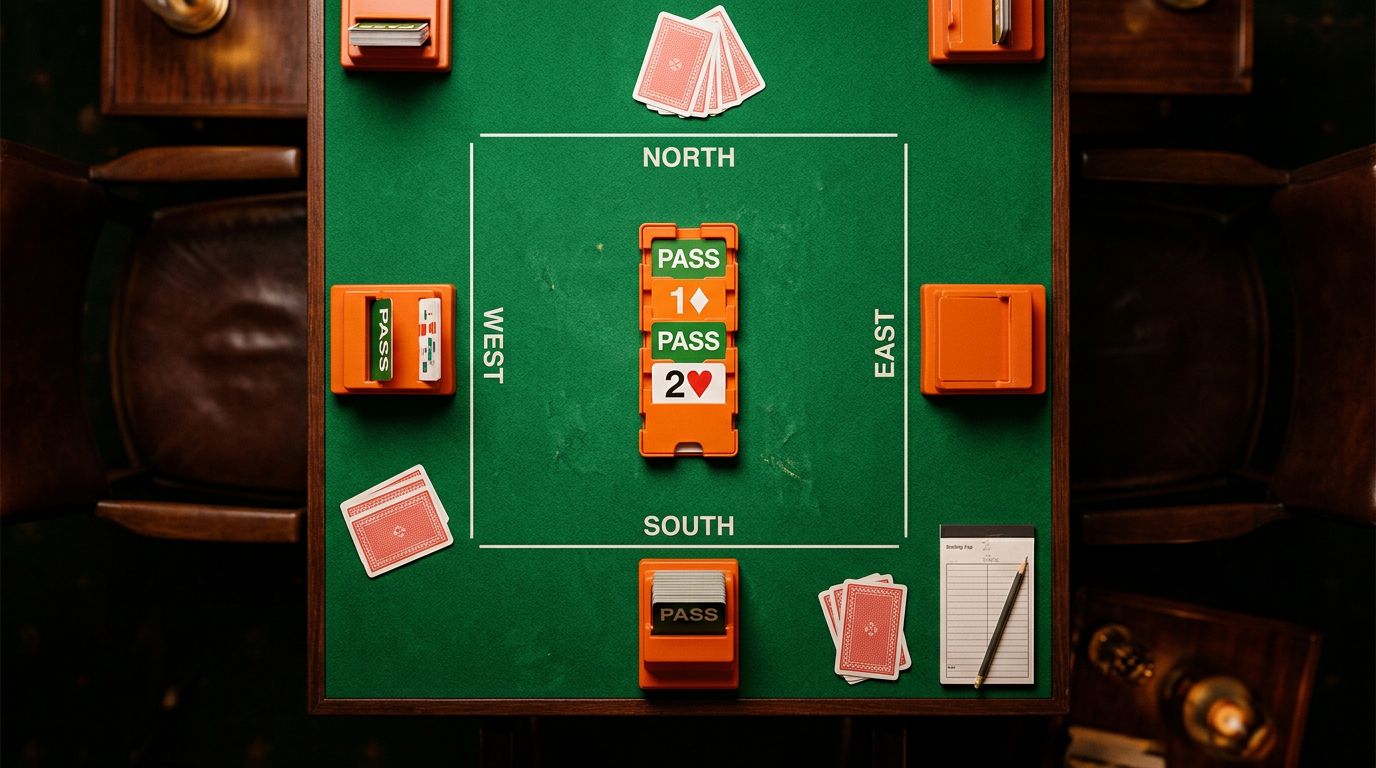
DONT Convention, Disturbing Opponents Notrump
DONT stands for “Disturbing Opponents’ Notrump,” and that’s exactly what it does. When opponents open 1NT, DONT gives you a structured way to compete with one-suited and two-suited hands.
The key difference from other defenses: double shows a one-suiter (any suit), and two-level bids show that suit plus a higher-ranking suit. It’s flexible, efficient, and gets you into the auction at the lowest possible level.
Marty Bergen developed DONT, and it’s become popular at tournaments and clubs. Some players prefer it to Cappelletti because you can show minor suits at the two level without going to the three level.
Basic Structure
After opponents open 1NT:
Double = One-suited hand (any suit, partner bids 2♣ to ask)
2♣ = Clubs and a higher-ranking suit (diamonds, hearts, or spades)
2♦ = Diamonds and a higher-ranking suit (hearts or spades)
2♥ = Hearts and spades
2♠ = Spades (one-suited, 6+ spades)
2NT = Both minors (at least 5-5)
Notice that 2♠ is natural. You can show spades immediately without going through double. This is a big advantage when you have a six-card spade suit.
The One-Suited Sequence (Double)
When you double to show a one-suiter, partner bids 2♣ to ask which suit.
Your rebids:
- Pass = Clubs (that’s your suit)
- 2♦ = Diamonds
- 2♥ = Hearts
- 2♠ = Spades
Example:
(1NT) - Double - (Pass) - 2♣
(Pass) - 2♥

You showed hearts.
Partner almost always passes your suit. With a great fit, they might raise.
What hands qualify for double?
After RHO opens 1NT, you hold:
♠ 73
♥ KQJ1065
♦ A84
♣ 62
Double. Partner will bid 2♣, and you’ll bid 2♥.
You have a six-card heart suit with 10 HCP. You want to compete, and 2♥ should be safe.
The Two-Suited Bids
2♣ = Clubs and a higher suit
This shows clubs plus diamonds, hearts, or spades. Partner usually bids 2♦ to ask which higher suit.
After RHO opens 1NT, you hold:
♠ KJ1065
♥ 7
♦ 84
♣ AQ974
Bid 2♣. You have clubs and spades.
Partner bids 2♦ to ask. You bid 2♠ to show spades. Partner picks between clubs and spades.
The asking sequence:
After 2♣, responder:
- Pass = Happy to play clubs
- 2♦ = Asking for the other suit
- 2♥/2♠ = “I want to play this suit if you have it”
If partner bids 2♦ asking, you bid:
- Pass = Diamonds (clubs and diamonds)
- 2♥ = Hearts (clubs and hearts)
- 2♠ = Spades (clubs and spades)
2♦ = Diamonds and a higher suit
This shows diamonds plus hearts or spades.
After RHO opens 1NT, you hold:
♠ 4
♥ AJ1074
♦ KQ963
♣ 82
Bid 2♦. You have diamonds and hearts.
Partner usually bids 2♥ to ask. You pass (yes, hearts) or bid 2♠ (no, spades).
If partner has three hearts and two diamonds, they pass 2♦. If they prefer majors, they bid 2♥ to ask.
2♥ = Hearts and spades
This is straightforward. You have both majors.
After RHO opens 1NT, you hold:
♠ AQ974
♥ KJ1063
♦ 7
♣ 84
Bid 2♥. Partner picks their better major.
Partner’s responses:
- Pass = Preference for hearts
- 2♠ = Preference for spades
- 3♥/3♠ = Invitational with good fit
- 4♥/4♠ = Game with fit and distribution
2♠ = Natural one-suiter
This shows a six-card (or longer) spade suit.
After RHO opens 1NT, you hold:
♠ AQJ1065
♥ 74
♦ K83
♣ 62
Bid 2♠. You have spades, and you’re showing them immediately.
This saves a step compared to doubling and then bidding spades. Partner can pass 2♠ with two or three spades, or raise with good support.
Responses to DONT
As responder, your job is to help partner find the best spot.
After double (one-suiter):
Bid 2♣ to ask. Almost always. Partner will show their suit, and you’ll pass or raise.
Exception: If you have a strong hand with a good suit, you can bid it naturally and ignore partner’s one-suiter. This is rare.
After 2♣ (clubs and higher):
- Pass if you’re happy in clubs
- Bid 2♦ to ask for the other suit
- Bid 2♥ to play hearts if they have clubs and hearts
After 2♦ (diamonds and higher):
- Pass with three diamonds and shortness in majors
- Bid 2♥ to ask which major
After 2♥ (both majors):
Pick your better major. With equal length, pass (hearts).
After 2♠ (natural spades):
Pass with two or more spades. Raise with invitational values and good support.
When to Compete
The same rules apply as other defenses to 1NT: you need shape or strength.
Good hands to overcall:
- 10+ HCP with a six-card suit
- 8+ HCP with a 5-5 two-suiter
- Great shape with 7+ cards in your suits
Don’t overcall with:
- Balanced 10-11 HCP
- Weak 5-4 distributions
- Vulnerable at unfavorable colors
Example of a good DONT bid:
After RHO opens 1NT, you hold:
♠ KJ1065
♥ 7
♦ AQ974
♣ 82
Bid 2♦. You have diamonds and spades, 5-5 shape, and enough values to compete.
Example of passing:
After RHO opens 1NT, you hold:
♠ QJ863
♥ K74
♦ AJ4
♣ 95
Pass. You’re balanced, your spade suit is weak, and you only have five spades. Not worth competing.
Common Mistakes
1. Forgetting that double isn’t penalty
You have 16 HCP balanced and want to double for penalty. In DONT, double shows a one-suiter, not penalty.
If you want to penalize 1NT, you have to pass and hope partner reopens, or just pass it out and defend.
2. Bidding 2♠ with spades and a minor
You have five spades and five clubs. You think “I have spades” and bid 2♠.
Wrong. 2♠ shows a one-suited spade hand. With spades and clubs, bid 2♣, then show spades after partner asks.
3. Not asking when you should
Partner bids 2♣ (clubs and higher), and you have three clubs. You pass.
Maybe correct. But if you have shortness in clubs and length in other suits, bid 2♦ to ask. You might find a better fit.
4. Competing with 4-4 in two suits
You need at least 5-4 to use DONT’s two-suited bids. With 4-4, pass. You don’t have enough shape.
Advanced: The 6-4 Problem
What if you have six spades and four hearts?
Option 1: Bid 2♠ (natural). This shows your six-card spade suit immediately.
Option 2: Bid 2♥ (hearts and spades). This shows both majors.
Most players bid 2♠ with 6-4. It’s clearer, and spades are your primary suit. But with a very weak hand, 2♥ gives partner options if they have heart length and spade shortness.
Example:
After RHO opens 1NT, you hold:
♠ AQJ1065
♥ K974
♦ 7
♣ 82
Bid 2♠. Your spades are strong, and you want to play there.
DONT vs Cappelletti
DONT pros:
- Can show minor suits at the two level (2♣ then pass = clubs)
- Natural 2♠ saves a step
- More economical
DONT cons:
- Double isn’t penalty (can’t double strong NT for penalty)
- More complicated for partner to respond
- Asking sequences take longer
Cappelletti pros:
- Can double for penalty
- Clearer structure (2♣ = any one-suiter is simple)
Cappelletti cons:
- Clubs and diamonds require going to the three level
- No natural 2♠ overcall
Both systems work. DONT is slightly more flexible. Cappelletti is slightly simpler for beginners.
Why DONT Matters
Opponents open 1NT about 15-20% of hands. If you pass every time, you’re giving them uncontested auctions constantly.
With DONT, you can compete. You can push them higher, find your own making contracts, or sacrifice profitably.
Example auction:
(1NT) - 2♥ - (Pass) - 2♠
(Pass) - Pass - (Pass)
You showed hearts and spades. Partner preferred spades. You play 2♠ making 3 for +140.
Meanwhile, opponents were making 2NT for +120. You gained 20 points by competing.
Or they bid 3NT, go down one, and you gain 150 points because you pushed them too high.
Example auction 2:
(1NT) - Double - (Pass) - 2♣
(Pass) - 2♦ - (3NT) - Pass
(Pass) - Pass
You showed diamonds via double. Opponents bid 3NT. They make it. You didn’t gain anything.
But at least you tried. And if partner had diamond support, you might have pushed them to a failing 3NT when they would have stopped in 2NT.
Practice Hands
Hand 1:
After RHO opens 1NT, you hold:
♠ 7
♥ KJ10965
♦ AQ84
♣ 73
Bid 2♦. You have diamonds and hearts.
Hand 2:
After RHO opens 1NT, you hold:
♠ AQ10765
♥ 84
♦ K7
♣ 962
Bid 2♠. Natural one-suiter.
Hand 3:
After RHO opens 1NT, you hold:
♠ K4
♥ 73
♦ KJ10965
♣ A84
Double. Partner will bid 2♣, and you’ll bid 2♦.
Hand 4:
After RHO opens 1NT, you hold:
♠ KJ1074
♥ 7
♦ 83
♣ AQ962
Bid 2♣. You have clubs and spades. After partner bids 2♦ to ask, bid 2♠.
Practice This Convention with Brian
Want to test your understanding of this convention in realistic hands? Brian, the Bridgetastic AI, can deal you practice hands, walk you through the bidding, and explain when this convention applies, and when it doesn’t. Try Brian free →
Final Thoughts
DONT is flexible, efficient, and gives you lots of ways to compete over 1NT. The asking sequences take practice, but once you and partner are comfortable, it flows smoothly.
The key is remembering what each bid shows:
- Double = one-suiter, any suit
- 2♣ = clubs plus higher
- 2♦ = diamonds plus higher
- 2♥ = both majors
- 2♠ = natural spades
Get those down cold, and you’ll disturb plenty of opponents’ notrumps.