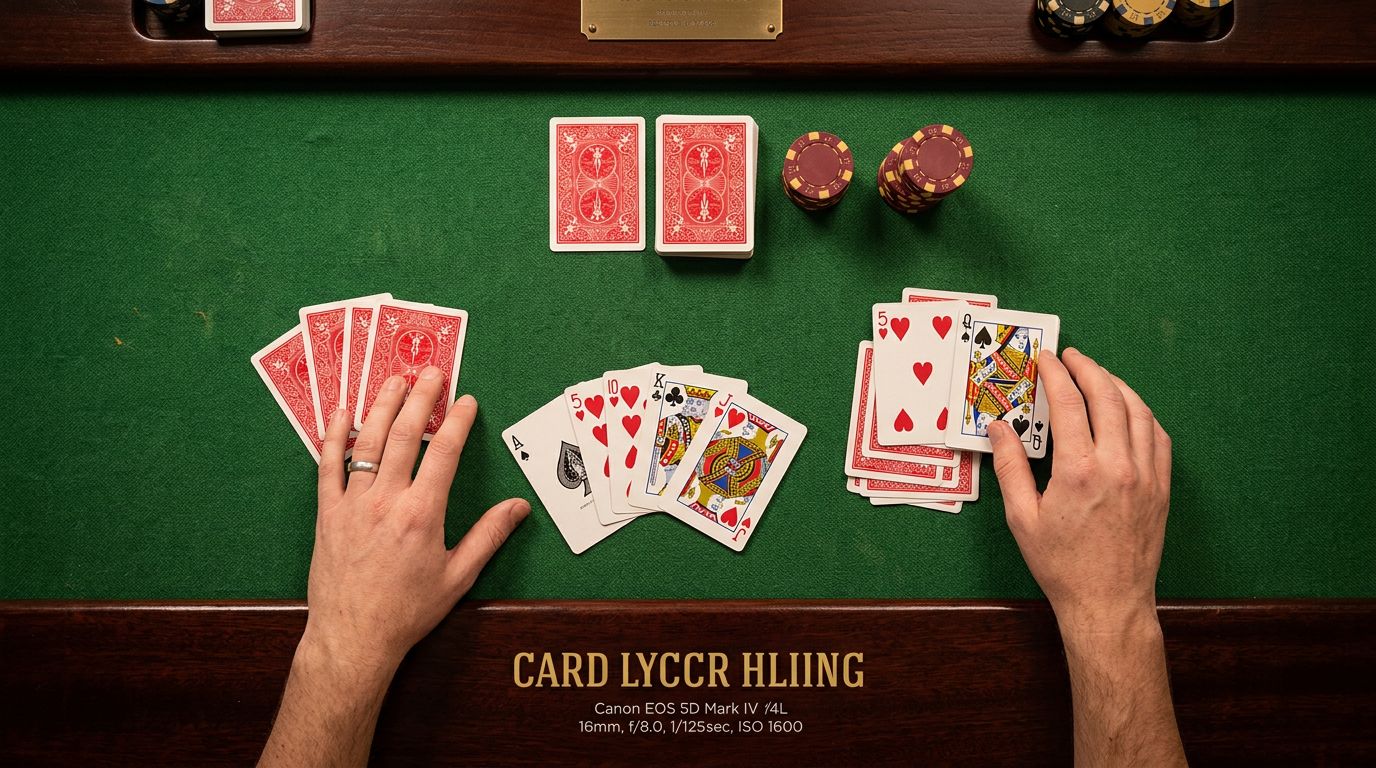
Card Reading in Bridge: The Art of Deducing Hidden Cards
Card reading is one of bridge’s most elegant skills, the ability to figure out where hidden cards are lurking without seeing them. It’s not magic, and it’s definitely not memorizing 39 cards. It’s detective work, pure and simple. Every bid, every card played, every hesitation (okay, maybe not that in proper bridge!) gives you clues about what’s hiding in those other three hands.
Good players make card reading look effortless. They seem to “know” where the ♠Q is. They finesse with confidence on the first trick. They duck at exactly the right moment. But here’s the secret: they’re not psychic. They’re just paying attention.
Let’s break down how you can read cards like a pro.
What Is Card Reading?
Bridge card reading is the process of deducing the location of unseen cards based on available evidence. You start with 13 cards in your hand and 13 in dummy. That leaves 26 cards hidden in the opponents’ hands. Your job as declarer (or defender) is to figure out where the crucial cards are hiding.
The term “card reading” makes it sound mystical, but it’s really applied logic. You collect clues from three main sources:
- The bidding auction - What players showed (and didn’t show)
- The opening lead and defensive signals - What defenders chose to play
- The play sequences - What cards appear and when
Then you combine these clues with mathematical probability. If someone opened 1NT showing 15-17 HCP and you can see 23 HCP between your hand and dummy, they have at most 17 HCP. That missing ♠K? It’s probably with their partner.
The best part about card reading? You get better at it every single hand you play. It’s a skill that compounds over time.
Reading from the Bidding
The auction is your first goldmine of information. Every bid paints a picture of a hand’s shape and strength.
Point Count Limits
When someone opens 1NT (typically 15-17 HCP), you immediately know their range. If you count 8 HCP in your hand and 10 in dummy, opener has at most 17 HCP. That means their partner has at most 5 HCP. Suddenly, placing high cards becomes much easier.
The same logic applies to other bids:
- Weak two-bids (5-10 HCP) limit a hand’s strength
- Preempts (even less strength, lots of shape)
- Strong 2♣ openings (22+ HCP or game-forcing hands)
Distribution Clues
Shape information is often more valuable than point count. When someone bids 1♠-2♥-3♥, they’ve shown five spades and four hearts. That’s only nine cards. They have four cards in the minors—but which minors? Keep watching the bidding.
If they bypass 3♦ to bid 3♥, they probably don’t have four diamonds (with 5-4-4-0 or 5-4-3-1 shape, they might bid differently). These small inferences add up.
Negative inferences matter too. When someone opens 1♦ (could be short) and rebids 1NT, they typically don’t have four hearts or four spades. If you need to place the ♥K, knowing opener doesn’t have length there helps.
Vulnerability and Competitive Bidding
A vulnerable overcall at the two-level promises something. A non-vulnerable 3♦ preempt in first seat could be wild or disciplined depending on your opponents. Against experienced players, trust their bids. Against beginners, verify with your eyes.
Reading from the Opening Lead
The opening lead is arguably the single most informative card in the entire deal. Your opponent chose that card from 13 options. Why that one?
Fourth-Best Leads
When a defender leads the ♠6 and you can see the ♠2, ♠3, ♠4, and ♠5 between your hand and dummy, that’s fourth-best from four spades. The “Rule of 11” tells you how many higher cards the other three hands hold: subtract the spot card from 11.
If partner leads the ♠6, there are 11 - 6 = 5 cards higher than the ♠6 in the other three hands. If you see three of them in dummy and two in your hand, declarer has zero cards higher than the ♠6. This tells you where the high spades are—and whether to play high or low from dummy.
Attitude and Count Signals
Standard defensive signals give you mountains of information:
- Attitude: A high spot card encourages; a low one discourages
- Count: High-low shows even count; low-high shows odd
When dummy hits and the opening leader’s partner plays the ♥2 (lowest), they’re screaming “I hate hearts, partner!” This tells you hearts are splitting poorly or the honors are wrong for the defense.
What They Didn’t Lead
Just as important: what did they not lead? Against 3NT, if they led a heart instead of a spade after partner bid spades, something’s wrong. Maybe they have ♠Ax and don’t want to give up a trick. Maybe they misplayed. Either way, you have information.
Against suit contracts, a failure to lead trumps often means the defender doesn’t have a natural trump trick. A failure to lead partner’s suit suggests values elsewhere or a doubleton.
Reading from Play Sequence
As the hand progresses, every card becomes a data point.
Second Hand Play
When you lead toward dummy’s ♠AQ and left-hand opponent plays low smoothly, they probably don’t have the ♠K. Most players (especially at lower levels) agonize before playing low from Kx or Kxx. If they had it, you’d feel the hesitation.
Of course, good players false-card. But even false-carding provides information, it means they’re experienced enough to think about deception.
Splitting Honors
When you lead toward ♥KJ10 in dummy and left-hand opponent plays the ♥Q, you know they have the ♥A too. With Qxx alone, most players play low and hope partner has the ace. Splitting honors (playing the Q) typically shows both touching honors.
This is called a “restricted choice” position, and it’s powerful for placing cards.
Discards
What opponents throw away speaks volumes. If a defender discards a diamond on the third round of clubs, they’re either out of clubs (count!) or telling partner something about diamonds.
Watch the spots too. Throwing the ♦2 says “I have nothing in diamonds.” Throwing the ♦9 says “I have diamond values.” These signals aren’t secret code—they’re standard play, and you should expect them.
Counting Out the Hand
This is where card reading becomes mathematical. Each opponent has exactly 13 cards. If you can determine their shape, placing the missing honors becomes trivial.
Follow to Suits
Let’s say you’re in 4♠ and you cash three rounds of hearts. Left-hand opponent follows to all three; right-hand opponent follows to two and ruffs the third. Now you know:
- LHO: at least 3 hearts
- RHO: exactly 2 hearts
If RHO opened 1♦ showing five diamonds and they’ve followed to two rounds of spades, you’re building a picture: 2 spades, 2 hearts, 5+ diamonds = 9 cards. They have at most four clubs.
The 13-Card Equation
Every defender has exactly 13 cards. This is your most powerful constraint. If you know someone is 5=2=4=?, the question mark must be 2. Not approximately 2. Not probably 2. Exactly 2.
As you play more suits, the unknowns become knowns. By trick 8 or 9, you often have complete counts. Now, when you need to guess who has the ♣Q, you don’t guess—you know.
Vacant Spaces
This is advanced, but worth knowing: if one opponent has more unknown cards in their hand than the other, missing honors are more likely to be with them. It’s pure probability.
If you know LHO has seven unknown cards and RHO has three unknown cards, a missing queen is more likely (7:3 ratio) to be with LHO. This “vacant places” concept overrides basic “restricted choice” and other guidelines when you have good count.
Inferences from What Opponents Didn’t Do
Sherlock Holmes famously solved a case because a dog didn’t bark. Bridge is the same.
Didn’t Double
When opponents stay silent over your aggressive 4♥ bid and you have 19 HCP combined, someone is missing defensive tricks. If they have the balance of power, why didn’t they double?
Maybe their values are in your suits. Maybe they’re broke. Either way, the silence tells you something.
Didn’t Cover an Honor
When you lead the ♠Q from hand toward dummy’s ♠AJ10 and LHO plays low, they don’t have the ♠K. “Cover an honor with an honor” is beaten into beginners. Most players with ♠Kx or ♠Kxx will cover, hoping to promote something in partner’s hand.
When they don’t cover, place the king with the other opponent.
Didn’t Shift Suits
You’re in 6♠ and win the opening diamond lead in dummy. You immediately cash the ♥A and another heart. LHO wins the ♥K and returns… a heart? They’re either brain-dead or they don’t have the ♦A or ♣A to cash. Otherwise, they’d shift to their cash trick.
Passive defense screams: “Partner, I don’t have a quick trick in the side suits.”
Didn’t Preempt
In first seat, favorable vulnerability, and neither opponent opened with a weak bid? They don’t have seven-card suits. This matters when you’re trying to place long suits for a potential strip squeeze or throw-in.
Example Card Reading Hands
Let’s see card reading in action.
Example 1: The 1NT Opening Lead
You’re declaring 3NT after partner opened 1NT (15-17). Dummy has 9 HCP. You have 10 HCP. Opponent leads ♠5.
What you know:
- Opener (partner/dummy) has 15-17 HCP
- You have 10 HCP
- Combined: 25-27 HCP visible
- Opponents have 13-15 HCP total
- The ♠5 lead suggests a four-card suit (fourth-best)
When you need to finesse for the ♦Q, you don’t guess randomly. If RHO passed initially, they have at most 11 HCP (with 12+ they might have opened). Count the HCP you’ve seen in their tricks. If you’ve seen the ♠A and ♣K from RHO (11 HCP), they cannot have the ♦Q. Finesse through LHO.
Example 2: The Preempt
RHO opens 3♥ in first seat. You overcall 3♠ and become declarer. LHO leads ♥K.
What you know:
- RHO has 7 hearts (typically for a 3-level preempt)
- RHO has 6 other cards
- RHO probably has 5-9 HCP
When you need to pick up trumps, you know RHO has at most 1-2 spades. If you’re missing ♠Qxx, the percentage play is to finesse through LHO, who has more space for spades (11-12 unknown cards versus RHO’s 5-6).
Example 3: The Strip and Count
You’re in 6♠ and you’ve played three rounds of hearts (both follow), three rounds of diamonds (both follow), and two rounds of clubs (LHO shows out on the second round).
What you know:
- LHO: 3 hearts, 3 diamonds, 1 club = 7 cards → exactly 6 spades
- RHO: 3 hearts, 3 diamonds, 5+ clubs = 11+ cards → at most 2 spades
Missing ♠QJx, you don’t finesse. You play for the drop—LHO has the length and therefore the honors.
Sharpen Your Strategy with Brian
Want to put these strategic concepts into practice? Brian analyzes your bridge hands and explains the optimal line of play. Try Brian free →
Common Card Reading Mistakes
Even experienced players slip up. Here are the classic errors:
Forgetting to Count
The most common mistake is simply not doing the work. Counting seems tedious until it wins you a contract. Get in the habit early: count every suit, every hand.
Start simple: count one suit completely. Then add a second. Eventually, you’ll count all four automatically.
Ignoring the Bidding
The auction happened for a reason. Don’t throw away that information once dummy appears. If someone showed 5-4 in the majors, they have exactly four cards in the minors. Use it.
Misapplying Probability
Yes, a finesse is 50-50 in a vacuum. But you’re not in a vacuum. You have bidding, leads, and play sequences. Adjust your probabilities based on evidence.
If an opponent opened 1NT and you’ve already seen 17 HCP from them, they don’t have any more high cards. Don’t finesse “with the odds”—play for the drop.
Playing Too Fast
Card reading requires thinking time. If you zip through tricks on autopilot, you’ll miss clues. Before playing from dummy at trick one, stop and think:
- What does the lead tell me?
- What did the auction show?
- What’s my plan?
Trusting Bad Players’ Bids
Against beginners, bids are guidelines, not guarantees. That 1NT opener might have 12 HCP or 19. That weak two might be Jxxxxx and out.
Verify with your eyes. Watch what cards appear and adjust your assumptions.
Not Using Negative Inferences
What didn’t happen is just as important as what did. When RHO doesn’t double, doesn’t cover an honor, doesn’t shift suits, that’s information. Don’t ignore the dog that didn’t bark.
Card reading separates okay players from good ones, and good players from great ones. The mechanics aren’t complicated: count to 13, remember the bidding, watch the spots. But applying these skills in real-time, at the table, under pressure? That takes practice.
Start small. In your next session, focus on counting just one suit completely. Then two. Build the habit of asking “why did they play that card?” every time an opponent contributes to a trick.
Before long, you’ll find yourself “knowing” where cards are. And that’s when bridge gets really fun.