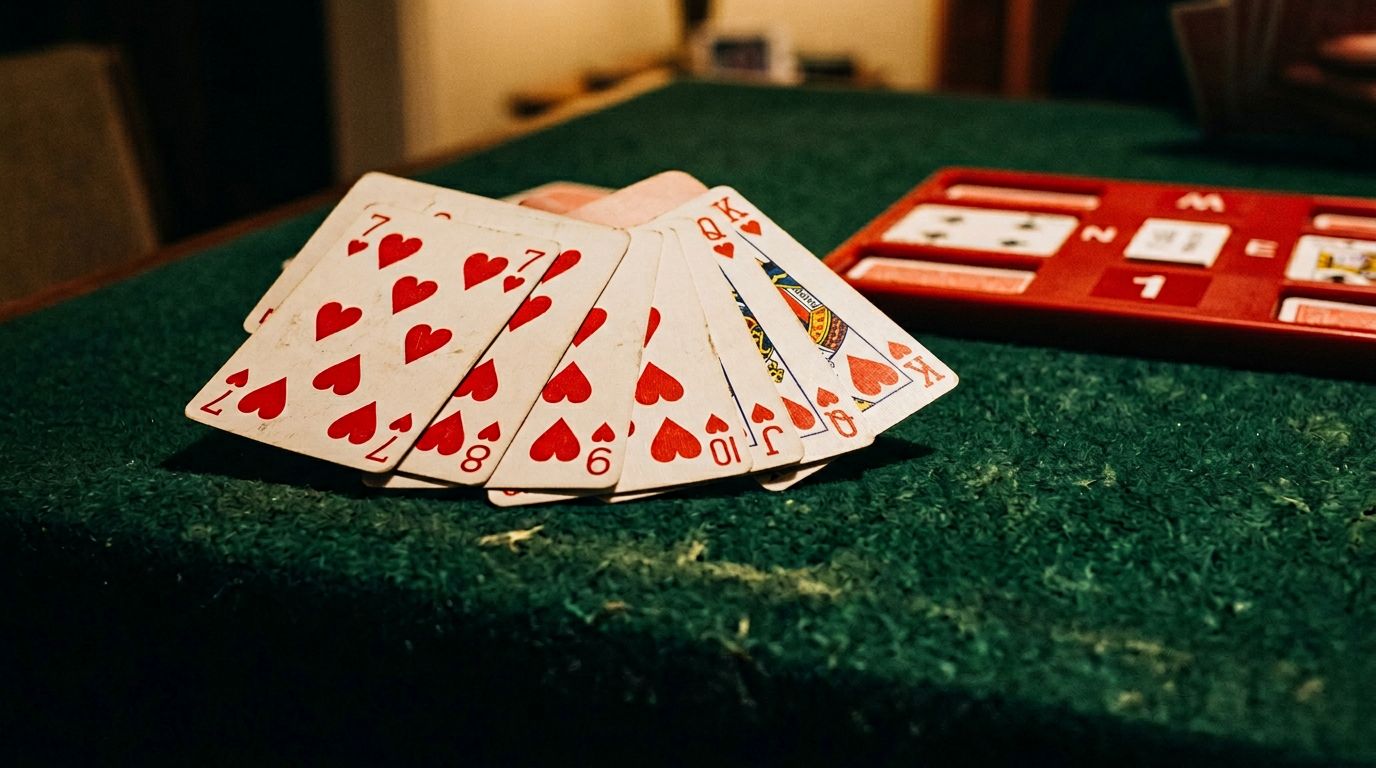
Preemptive Bidding: Taking Away Their Bidding Space
A preemptive bid bridge play is one of the most effective weapons in your arsenal. It’s controlled chaos. You voluntarily start the auction at a high level with a weak hand, forcing the opponents to make critical decisions at uncomfortable levels with limited information.
Get it right, and you steal contracts you have no business winning, push opponents into bad games, or goad them into doubling you when you’re only going down one or two. Get it wrong, and you go down 800 defending against a partscore, or talk partner out of a making game.
The brilliance of preemptive bidding is its asymmetry. You know you’re weak. Partner knows you’re weak (you just told them). But the opponents? They’re in the dark. They have 25 high-card points between them and need to find their fit, their level, their strain—all while navigating around your 3♥ opening that ate up seven levels of bidding space.
Preemptive bidding isn’t about your hand. It’s about making their lives miserable while giving partner just enough information to make intelligent decisions. Let’s talk about how to preempt effectively without blowing up your own auctions.
What Is a Preempt?
A preempt is an opening bid at the three-level or higher that shows a long suit (seven+ cards), a weak hand (6-10 HCP), and limited defensive strength outside your suit.
The purpose is simple: consume bidding space. When you open 3♥, the opponents lose all one- and two-level bids they’d use to explore. They start guessing at the three-level.
In a normal auction (1♠-2♦-2NT-6NT), they exchange information comfortably. After your 3♥ opening, they’re guessing: 3NT? Double? Do we have a fit? That’s the point.
Preempts trade accuracy for disruption. Since opponents usually hold more high cards, making their auction harder is a profitable trade.
Opening Preempts: The Three-Level
The classic preempt is a three-level opening (3♣, 3♦, 3♥, 3♠). This shows:
- Seven cards in the bid suit
- 6-10 high card points (some play 5-11 depending on vulnerability)
- Most of your strength in your long suit
- Very little outside defensive strength (no aces and kings in other suits, or you’d open one of a suit)
Example Hand 1: Classic 3♥ Opening
♠ 84
♥ KQJ9763
♦ J5
♣ 82
This is a textbook 3♥ opening. Seven hearts. 7 high card points. Good suit quality (three honors). No aces, no kings outside hearts. No defensive tricks. Perfect.
Example Hand 2: Another 3♠ Opening
♠ AQJ10764
♥ 8
♦ 1053
♣ 94
Seven spades, 9 HCP, all in spades. Open 3♠. The suit is excellent (you expect to take six or seven tricks if spades are trumps), but you have nothing outside.
Example Hand 3: NOT a Preempt
♠ KJ98754
♥ A6
♦ K3
♣ 82
Don’t preempt. You have 11 HCP and two defensive tricks (ace and king outside your suit). Open 1♠. If you preempt and partner has 12-13 points, you’ll miss game. Preempts deny opening-bid strength.
The Four-Level Opening Preempt
Four-level openings (4♥, 4♠, 4♦, 4♣) show even weaker hands with even longer suits—typically eight cards. The high-card point range is similar (6-10), but the distribution is more extreme.
When to open 4♥ or 4♠:
You have an eight-card major suit and a weak hand. You’re willing to play game (or close to it) in your suit, and you want to shut out the entire auction.
Example Hand 4: Open 4♠
♠ KQJ98765
♥ 6
♦ 1042
♣ 8
Eight spades, weak hand. Open 4♠. You might make it. You might go down two or three. But the opponents probably have a contract (maybe a heart fit, maybe 3NT), and now they have to guess at the four-level or higher.
When to open 4♦ or 4♣:
This is more controversial. Some partnerships use 4♦/4♣ as natural preempts (eight-card minor, weak). Others use them as conventional bids (showing specific two-suited hands). Discuss with your partner.
For natural minor preempts: you rarely want to preempt to 4♦ or 4♣ because five of a minor is a long way from home, and 3NT is often easier to make. Most experts use 4♦/4♣ as conventional.
The key difference: 3-level vs. 4-level
- 3-level: Seven-card suit, leave room for partner to explore
- 4-level: Eight-card suit, shut out the auction completely
The Rule of 2-3-4: How High to Preempt
The Rule of 2, 3, and 4 tells you how many tricks down you can afford:
- Not vulnerable: Within three tricks of your bid
- Vulnerable: Within two tricks of your bid
- Favorable (white vs. red): Can afford four tricks down (aggressive)
Why? Down three not vulnerable doubled = 500 points (their vulnerable game’s value). Down two vulnerable = 500 points. The rule keeps your penalties reasonable while maximizing disruption.
In practice: Count your playing tricks. With 7 tricks in hand, bid to 9 tricks (3-level) vulnerable, or 10 tricks (3-level to 4-level) not vulnerable. This keeps you within safe penalty ranges.
Vulnerability Considerations
Vulnerability transforms your preempting strategy:
Favorable (white vs. red): Preempt aggressively. Down 500 saves their 620 game. Open 4♥ on borderline hands. Example: ♠6 ♥QJ109874 ♦1063 ♣82—open 4♥ white vs. red. Same hand red vs. white? Pass.
Unfavorable (red vs. white): Be disciplined. Their game is 420; your penalty at 500+ loses. Need solid suits and playing tricks.
Both vulnerable: Sound bridge only. Good suits, honest values. Penalties are expensive, games valuable.
None vulnerable: The wild west. Preempt freely, penalties are cheap, chaos favors the weaker side.
Responding to Partner’s Preempt
The golden rule: Partner has already bid your cards once. Don’t bid them again.
Partner opens 3♥ showing seven hearts and 6-10 HCP. With 9-12 HCP and support, you don’t have game. Pass.
Raise to game: Need 15-17+ HCP with a fit. Partner already bid based on trick-taking potential; you need extras to compensate for their lack of outside values.
Example: Partner opens 3♥, you hold ♠AQ4 ♥K3 ♦AJ1095 ♣K62—bid 4♥ with 17 HCP and controls everywhere.
Bid 3NT: Partner opens a minor, you have 15-17 HCP with stoppers. Example: 3♦ opening, you hold ♠AQ10 ♥KJ8 ♦93 ♣AQ1054—bid 3NT.
Pass: Most of the time. Don’t “correct” suits, don’t raise without game values. Trust partner’s preempt.
Seat Position Matters
Where you sit changes your preempting strategy dramatically.
First seat: You’re opening before anyone has spoken. Be disciplined, partner might have a strong hand. Avoid preempting with voids in other suits (you might have a huge fit elsewhere).
Second seat: After RHO passes. Similar to first seat but slightly safer: RHO’s pass suggests they’re not super strong. Still, partner is unlimited.
Third seat: After two passes. This is prime preempting territory. Partner passed, so you’re not preempting them out of anything. LHO is unlimited, but you’ve made their life difficult. Be aggressive here.
Fourth seat: After three passes. Different philosophy. The board was passing out. Only preempt if you think you can make your contract (constructive), or you have a tactical reason. Don’t create action just because you have a long suit, you might turn a zero into a minus.
Defensive Preempts: Jump Overcalls
After opponents open, you can preempt too. A weak jump overcall shows the same as an opening preempt: seven-card suit, weak hand, limited defense.
Example: Opponent opens 1♦, you hold ♠KQJ9764 ♥8 ♦1053 ♣94—bid 3♠. You disrupt opener’s partner, who might have had a 1♥ response planned.
Don’t jump overcall with: Defensive strength outside your suit (simple overcall instead), opening-bid values, or terrible vulnerability.
Example Preemptive Hands
Favorable vulnerability (white vs. red), first seat:
♠7 ♥5 ♦KQJ109764 ♣853
Open 5♦. Eight diamonds, favorable vulnerability—go big and make them guess.
Both vulnerable, second seat:
♠94 ♥AJ109764 ♦8 ♣Q52
Open 3♥. Good suit, disciplined vulnerable preempt.
Fourth seat, none vulnerable:
♠6 ♥QJ109753 ♦1084 ♣73
Pass. Fourth seat preempts should be constructive, don’t create action when the board was passing out.
After RHO opens 1♦:
♠KQ1098754 ♥6 ♦83 ♣94
Bid 4♠. Classic defensive preempt—eight spades, disrupt their auction.
Common Preempting Mistakes
1. Preempting with opening-bid strength: ♠KJ109764 ♥A ♦KQ3 ♣94 (13 HCP)—open 1♠, not 3♠. Preempts deny opening values.
2. Terrible suits vulnerable: ♠10987654 vulnerable—don’t preempt on garbage. You risk -1100 and partner might raise expecting a real suit.
3. Preempting partner out: Second seat after partner passes, be careful. Partner might have had a strong hand waiting to act.
4. Raising on minimal values: Partner opens 3♥, you have 11 HCP—pass. Need 15-17+ HCP to raise preempts to game. Partner already bid your tricks once.
5. Preempting with voids: First/second seat with ♥—void—risky. Might have massive heart fit with partner.
6. Bidding over partner’s preempt without game: Don’t “show your suit” over partner’s preempt. Pass unless you clearly have game.
7. Fourth seat preempts: After three passes, only preempt constructively. Don’t create action when taking a zero.
8. Ignoring vulnerability: Check every time. Favorable = aggressive, unfavorable = conservative.
The Preempting Mindset
Preempts are controlled aggression within boundaries: Rule of 2-3-4, vulnerability, suit quality.
Before preempting, check:
- Right shape? (Seven+ card suit, weak outside)
- Suit quality? (Vulnerable needs honors)
- Vulnerability? (Favorable = aggressive, unfavorable = conservative)
- Seat? (First/second = risky to partner, third = safe, fourth = constructive)
- Playing tricks? (Rule of 2-3-4 determines level)
After partner preempts: Do we have game (15-17+ HCP)? Usually pass.
When opponents preempt: Can I bid? Should I double for penalty? Often defending is best.
Sharpen Your Strategy with Brian
Want to put these strategic concepts into practice? Brian analyzes your bridge hands and explains the optimal line of play. Try Brian free →
Preempts Work Because
You sacrifice accuracy for disruption. The trade is profitable because opponents usually hold more high cards, disrupting stronger hands is worth more than finding your perfect contract.
Good players preempt with discipline: proper suit length, vulnerability awareness, Rule of 2-3-4. They don’t preempt on junk vulnerable or overbid after partner preempts.
Bad players preempt wildly, go -800 defending partscore, preempt partner out of games, and raise preempts on hope.
Use preempts intelligently and opponents struggle in competitive auctions. You steal impossible contracts, push them too high, and improve your results, especially at matchpoints where disruption creates swings.
Preemptive bidding isn’t reckless. It’s strategic aggression within rules. Follow the guidelines, check vulnerability, and watch opponents squirm. That’s the preemptive bid bridge strategy working exactly as designed.